
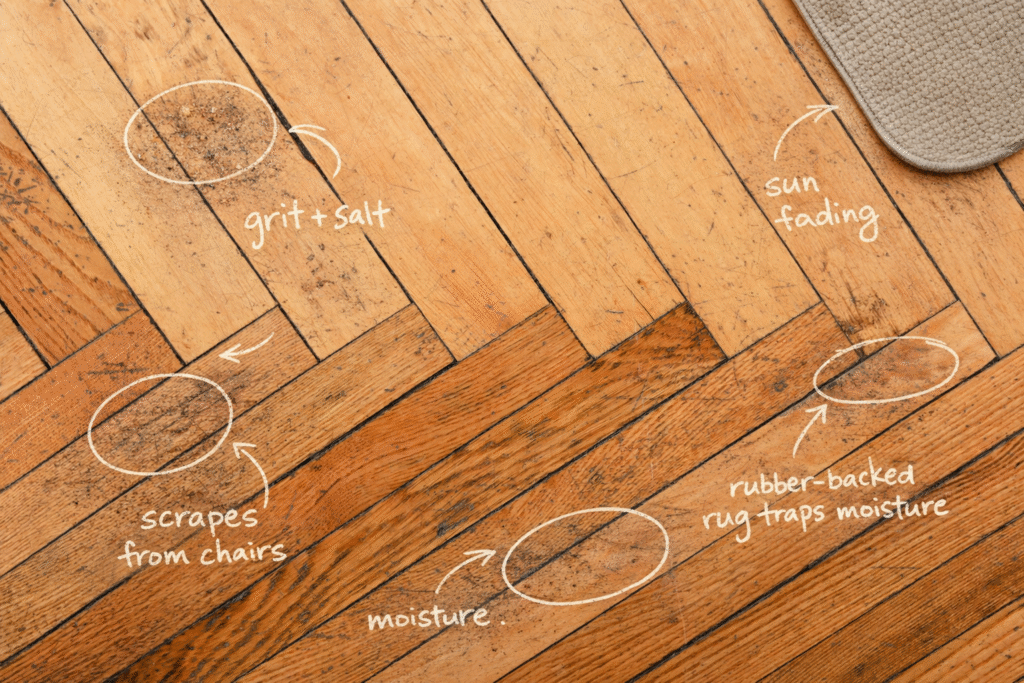
8 Habits That Quietly Age Your Floors
Most floor damage doesn’t happen all at once.
It happens slowly. Quietly. A little at a time.
And in busy homes — especially in winter — it’s usually not neglect. It’s normal life.
If your floors feel like they’ve aged faster than they should, one (or more) of these habits may be the reason.
1. Letting Grit Sit at Entry Points
Dirt, sand, and winter salt don’t just look messy — they act like sandpaper.
Every step grinds those particles into the surface. Over time, that’s what creates dull pathways near doors and hallways.
If you ever notice wear patterns that seem oddly specific, entry points are usually where it starts.
2. Cleaning Them “Too Aggressively”
This surprises people.
Steam mops, vinegar solutions, soaking-wet mops, and harsh all-purpose cleaners can slowly break down the protective finish on many floors.
Floors rarely fail from neglect.
They fail from repeated overcorrection.
If you’re trying to “deep clean” regularly, you may be slowly dulling the very layer meant to protect them.
3. Dragging Furniture (Even Slightly)
Scooting dining chairs. Shifting bar stools. Sliding a couch a few inches.
Each movement may feel minor, but over time those micro-scratches accumulate. The result isn’t one big gouge — it’s a gradual loss of clarity and sheen.
Kitchen areas tend to show this first.
4. Wearing Shoes Indoors
Gravel in the tread. Heels. Cleats. Daily repetition.
Shoes concentrate pressure and debris in a way bare feet simply don’t. In high-traffic homes, this can accelerate visible wear faster than most people expect.
You don’t have to panic — but it’s worth being aware.
5. Letting Sunlight Hit the Same Spot Every Day
Natural light is beautiful.
But consistent UV exposure can cause uneven fading over time — especially near large windows and sliding doors.
It’s slow. It’s subtle. And it’s permanent.
If one area of your floor looks lighter or warmer than another, sunlight may be the reason.
6. Ignoring Small Moisture Zones
It’s rarely a flood that causes long-term issues.
It’s the tiny, repeated moisture:
Pet water bowls
Sink splashes
Wet boots
Overwatered plants
Small amounts of water that sit regularly can weaken seams and edges over time — especially in certain materials.
7. Using Rubber-Backed Rugs
This one flies under the radar.
Rubber-backed rugs can trap moisture underneath and restrict airflow. On some finishes, that can lead to discoloration or uneven aging.
It’s not about avoiding rugs — it’s about knowing how they interact with your surface.
8. Waiting Until It “Looks Bad” to Do Maintenance
Many floors are designed to be refreshed before visible damage sets in.
Once heavy wear, deep scratches, or discoloration show up, refinishing or simple maintenance may no longer be an option.
The irony?
The most affordable maintenance often happens before you think you need it.
The Bigger Picture
None of this means your floors are doomed.
Most of these habits are just part of normal family life.
But understanding how surfaces age helps you:
Extend their lifespan
Avoid preventable damage
Make smarter upgrade decisions when the time comes
Sometimes a simple change in routine makes years of difference.
If you’d like an honest opinion on whether your floors need maintenance or replacement, we’re happy to take a look. Contact us today!